
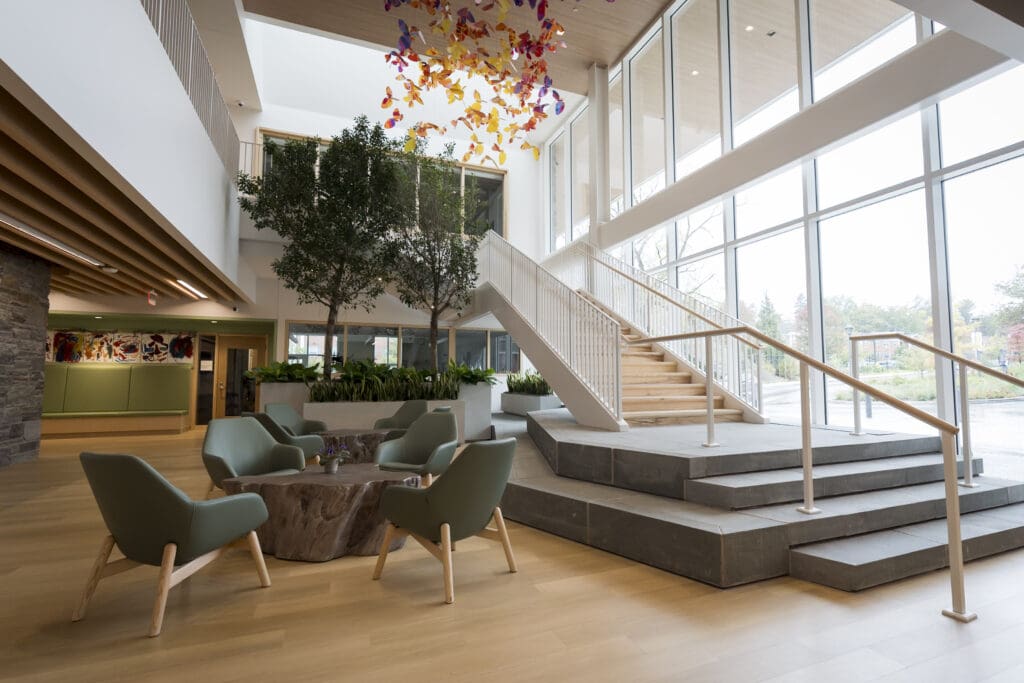
Learning extends beyond the classroom. Students move throughout the day between libraries, dining areas, laboratories, common spaces, athletic facilities, and other parts of campus. Each space must provide conditions that allow students to focus, participate, and move through their day without unnecessary distractions.
For educational institutions, reliable campus facility support is essential to creating a positive learning environment.
What the Research Tells Us
Research shows that learning environments are shaped by several interconnected conditions. A 2023 review published in Building and Environment examined four primary areas: thermal comfort, acoustics, lighting, and indoor air quality. The review found that discomfort caused by temperature, noise, inadequate lighting, or poor air quality can affect concentration, communication, well-being, and the overall learning process.
A separate systematic review of 21 higher-education studies reached similar conclusions. Students performed better in environments that were cool, bright, and quiet, with lower carbon dioxide levels. In contrast, poor conditions caused discomfort, reduced alertness, and made it difficult for students to pay attention.
The research also found that no single environment is ideal for every type of learning. Conditions that support a lecture may differ from those needed for collaborative work, focused study, or hands-on instruction. This makes consistent monitoring and responsiveness especially important across campuses, where spaces serve many different purposes.
How Facilities Services Support Learning
These findings underscore the strong connection between facilities operations and learning. Temperature complaints, disruptive noise, poor lighting, inadequate ventilation, or unresolved maintenance issues can distract from teaching and learning.
Facilities teams prevent these issues from becoming persistent problems. Routine custodial services keep learning environments clean and comfortable. Preventive maintenance ensures heating, cooling, ventilation, and lighting systems function properly. Regular oversight catches concerns early, and prompt responses restore spaces quickly when issues occur.
A facilities partner may not determine academic outcomes, but it plays a vital role in maintaining the conditions where learning happens. Consistent, responsive service, tailored to each space, enables students and faculty to focus on their individual success.
Supporting the Full Campus Experience
The impact of the physical environment goes beyond academics. Campuses are where students form relationships, faculty and staff collaborate, families visit, and communities gather. Clean, comfortable, well-maintained spaces make these experiences welcoming and foster confidence in the institution.
At Campus Services Group, we recognize that every campus space shapes the overall experience. Through structured facilities management and campus maintenance, we support areas where people learn, connect, compete, dine, work, and gather. Our teams help educational institutions create environments that reflect their standards, build campus pride, and advance their mission.